
When a developer builds a new transit line, bridge or hospital, a Community Benefits Agreement (CBA) ensures that the money spent on a large project doesn’t just produce a building, but also provides social and economic advantages to the people living nearby. In Canadian policy circles, CBAs are a file that comes across as relatively left-coded.
I interacted with the file during my time in government and took for granted that the mix of stakeholders involved were relatively progressive, and so were their proposals. Labour unions, local community groups and organizations representing historically marginalized groups all had prominent seats at the table.
And the community benefits they championed reflected that: hiring commitments targeting local workers and underrepresented groups, apprenticeship and training requirements tied to unionized trades and procurement conditions designed to steer contracts toward local and Indigenous-owned businesses. All legitimate goals, but ones that tend to load up a project with conditions before a single shovel hits the ground.
My mental model on the fate of CBAs was simple: a pendulum swinging back and forth. More activity and levers being pulled during NDP/Liberal governments, and a retrenchment or standstill when Conservatives took the helm.

A recent Substack post by Mitch Davidson, Ontario Premier Doug Ford’s former Executive Director of Policy, has me second-guessing that thinking entirely. Could there be an alternate vision for CBAs that aligns with Conservative governments? What if, instead of retrenchment, Conservative governments aggressively pushed forward their own CBA policies with different objectives and criteria? It’s an idea from an unexpected source, but one the traditional CBA stakeholder universe should spend more time thinking about.
Using the backdrop of a specific project, Newfoundland’s Bay du Nord deep-sea offshore oil project, Davidson sketches out a CBA framework that sidesteps what often aggravates the right: additional time delays and cost, unionization requirements and the picking of winners.
Two criteria seem to emerge from this approach. The first is that community benefits can’t seriously impede project delivery, a condition that cuts against some of the more process-heavy CBA frameworks progressives have championed. The second is a preference for long-term economic gains over short-term ones—durable industrial capacity rather than just construction-phase jobs.
In Davidson’s example, the Province of Newfoundland and Labrador opted to abandon previous CBA requirements focused on domestic manufacturing, instead conditioning support on helping the province acquire a floating dry dock facility, something with the potential to bolster the province’s economic fortunes well beyond the life of the project.
That first criteria should give Liberal and NDP wonks pause, because the CBA features they tend to care most about (local hiring commitments, unionization requirements and targeted procurement) are precisely the ones most likely to run afoul of it.
Canadians are losing faith in their governments. They don’t trust that there’s state capacity to deliver ambitious projects on time or on budget—and for good reason. CBAs aren’t the cause of this decline, but it’s difficult to argue with a straight face that poorly designed ones don’t contribute, at least on the margins.
That presents a real opportunity.
With Conservative governments in power across much of the country right now, CBA stakeholders who are willing to engage on these terms have more potential partners than the traditional pendulum model would suggest.
But there’s also a broader lesson here for those of us on the centre-left. Designing CBAs that prioritize delivery isn’t necessarily a concession to the right—it’s how you build the kind of track record that earns the public trust needed to do ambitious things in the first place.
Share with a friend
Related reading

Getting capital into local businesses and communities must be part of Canada’s investment strategy
Getting capital into local businesses and communities must be part of Canada's investment strategy.
Mapping Canada’s Variable Geometry
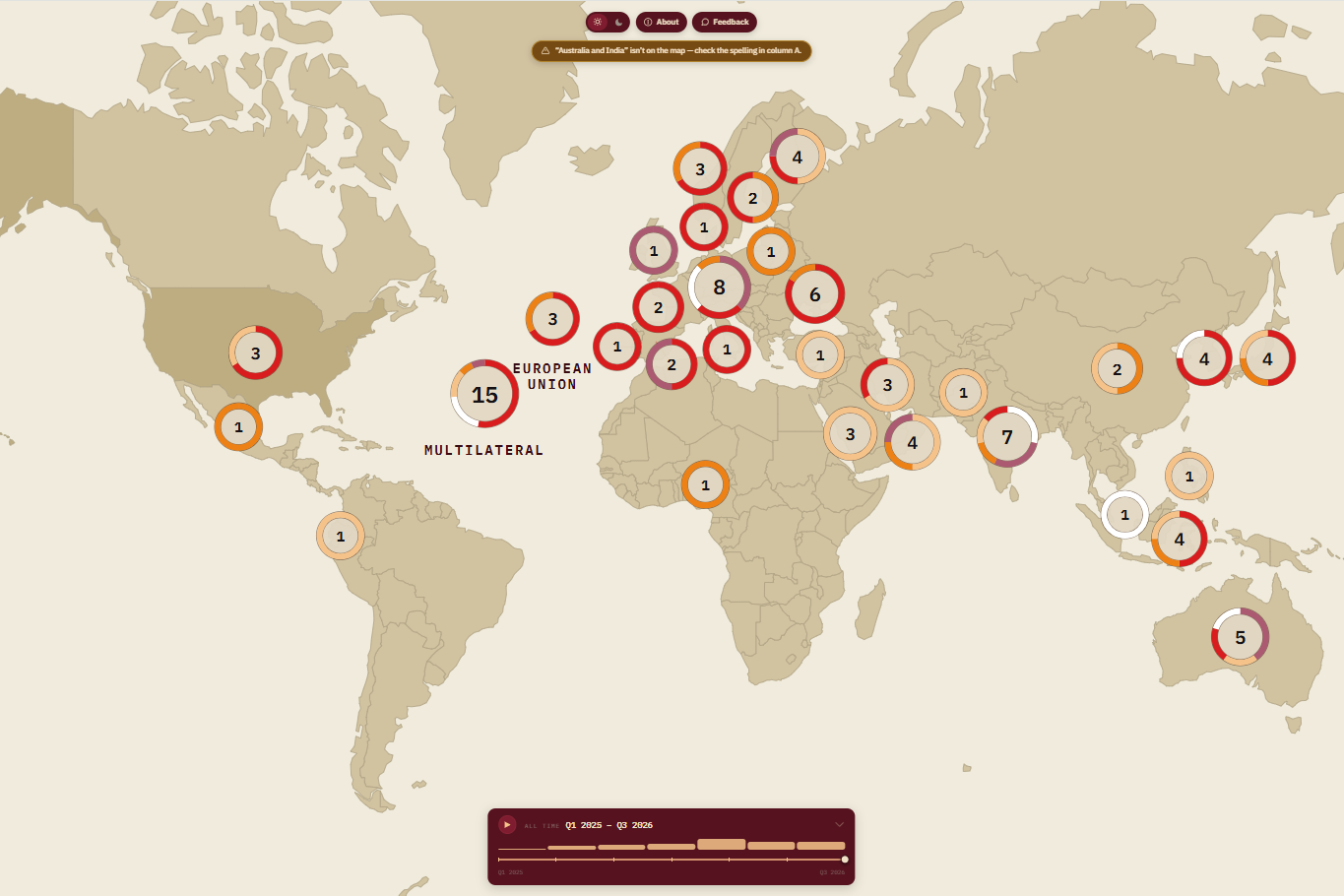
In partnership with the Canadian Shield Institute and the Gloves Off podcast SCP built a map of Canada's new international agreements.
Social Capital Partners’ 2026 Federal Pre-Budget Submission
Canada must mobilize all the tools at our disposal right now to build a strong, sovereign, resilient economy.