
By Danny Parys
Recently, 11,000 workers at Global Consulting firm Accenture lost their job. The reason? According to CEO Julie Sweet, they didn’t have a viable path to reskill on artificial intelligence.
How she determined that all 11,000 weren’t fit for retraining remains a mystery. Did anyone ask them? Did anyone ask the 20,000 UPS workers who lost their job to AI if they had the requisite capacity to be upskilled? What about the 5,900 now former Cisco employees displaced by automation? Will anyone ask the next tranche of soon-to-be former employees if they’re ready to embrace new technologies before they get locked out of their company emails?
If recent history is any indicator, I doubt it.
So much uncertainty surrounding AI and its impact on jobs has many Canadian workers asking themselves, “who’s next?”
As they should. Because as Canadian productivity stalls, and with 60% of Canadian workers in roles at risk of AI driven job transformations, business leaders, and even the Prime Minister, are champing at the bit to automate workforces.
With so many livelihoods at stake, it’s clear that the Canadian economy needs to make bold changes, not just to ensure that the productivity gains of AI and automation are realized, but that workers are consulted first.

Getting the balance right will be tricky, and to do so, mandated codetermination must be the first step.
Though a relatively innovative concept in Canada, codetermination, the term used to denote worker representation on corporate Boards of Directors, has long been codified in law in many European countries.
In a nutshell, codetermination models ensure that workers take an active role in corporate governance and have a say in major company decisions.
In Germany, where codetermination laws are among the strongest and most studied, law mandates that workers make up at least 50% of board directors for all companies with over 2000 employees, and at least 33% of all directors for firms with 500 or more employees.
While skeptics of the model often fear that too many workers in the boardroom will prevent businesses from being as agile responding to market changes, discourage innovation and prioritize unsustainable salary increases, the reality of co-determination shows quite the opposite.
Instead, Germany has become famous for its high skilled economy, and has become a leader in automating their production systems. Efficiency has become a German stereotype, and data from firms with a shared governance structure suggests that they invest more into their production systems, and outsource less, while having a neutral effect on wage growth.
Though data surrounding AI rollouts remain scarce, initial studies suggest co-determination models promote more worker consultation prior to technological implementation. In these instances, employees are consulted before new technologies are implemented, and in some cases management is obligated to provide a digital implementation road map, allowing workers and management to discuss, and negotiate, the impacts that technology will have on employment and productivity before it is implemented.
The result of a more consultative strategy when it comes to technology and automation implementation in the workplace means that German firms with co-determinative governance models are less susceptible to layoffs, and value worker stability, while having no negative impact on business growth or investment.
As the early impacts of AI begin to displace workers, making countless job skills obsolete, workers are starting to worry if they have the right skills for today’s economy. Retraining and upskilling employees will become a priority.
With codetermination, and more workers involved in corporate governance, businesses will be more likely to develop reskilling plans internally and more likely to redeploy talent in other parts of their organization, as opposed to exiting employees at the first sign of productivity gains from AI.
The alternative, if Canada persists with the status quo of corporate governance, means we must get used to mass layoffs, high unemployment and the fruits of new technologies going to a select few: Those deemed “viable for AI upskilling.” Whatever that means.
Share with a friend
Related reading
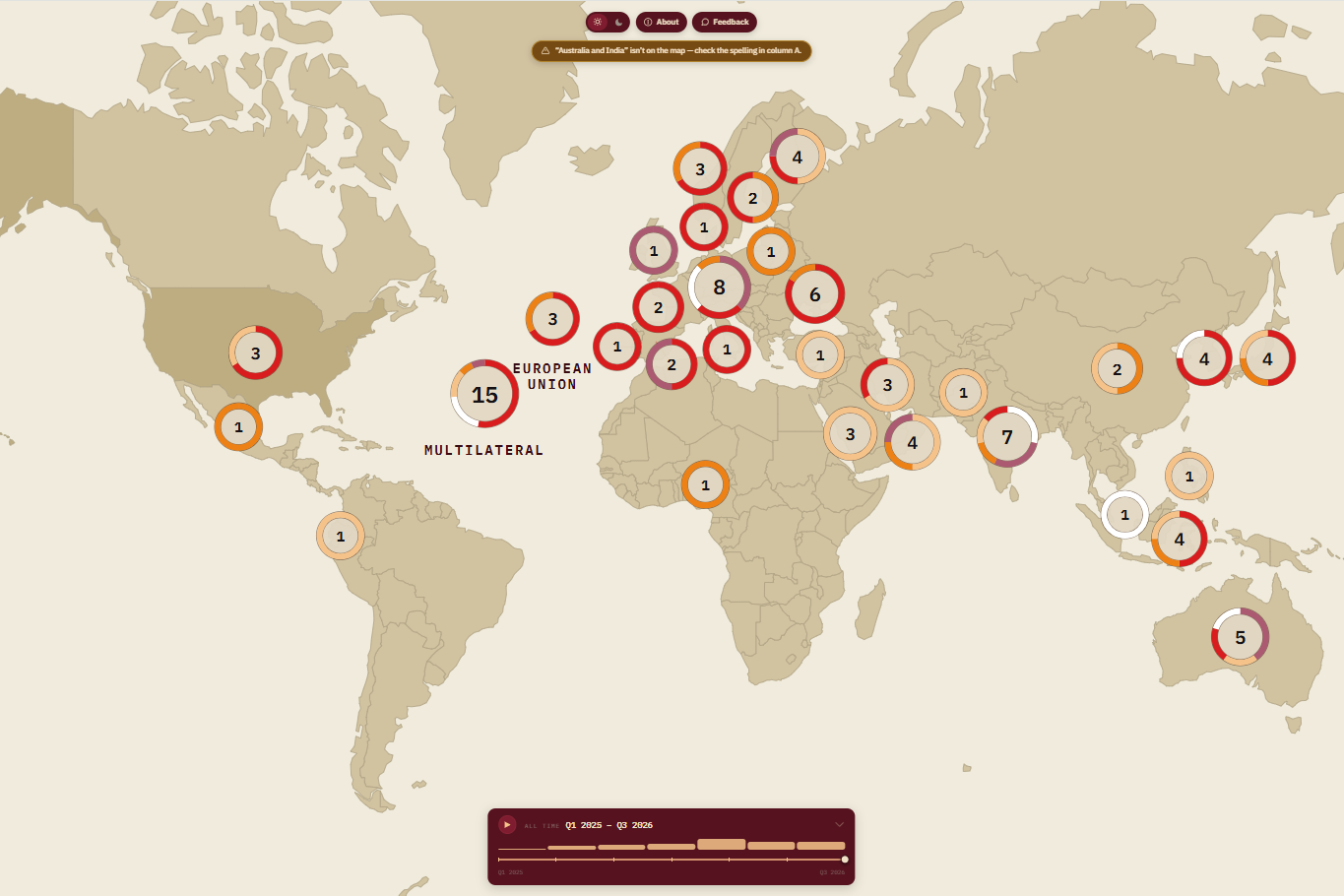
Mapping Canada’s Variable Geometry
In partnership with the Canadian Shield Institute and the Gloves Off podcast SCP built a map of Canada's new international agreements.

Social Capital Partners’ 2026 Federal Pre-Budget Submission
Canada must mobilize all the tools at our disposal right now to build a strong, sovereign, resilient economy.
Built to Reach: How institutional accountability shapes the reach of financial systems
Canada needs a greater diversity of accountability in financing institutions to reach all our viable enterprises.