

On February 7, 2025, the Canadian Anti-Monopoly Project (“CAMP”) and Social Capital Partners (“SCP”) submitted a joint letter to the Ontario Securities Commission (“OSC”) in response to the OSC’s Consultation Paper 81-737 – Opportunity to Improve Retail Investor Access to Long-Term Assets through Investment Fund Product Structures. The comments detail deep concerns from CAMP and SCP regarding the proposals set forth in the Consultation Paper related to expanding access to private equity.
CAMP and SCP are focused, among other matters, on educating Canadians and our policymakers about the risks associated with buyout private-equity funds and the harms they can cause. CAMP published “The Private Equity Playbook: How buyout firms extract rather than build value and what to do about it” and CAMP and SCP jointly hosted a virtual talk with some of the leading private equity critics to educate Canadians about how buyout private equity operates and how it impacts our economy and communities.
The perspectives are rooted in nearly a decade of first-hand legal and exempt-market dealer industry experience, working with or advising fund managers and/or their portfolio companies. Read the letter for complete comments.
Share with a friend
Related reading

Sellers’ inflation is back on the horizon. We can stop it before working people pay the price.
Trade-war chaos and confusion are creating a perfect storm for sellers' inflation—when companies with market control choose to hike prices to gouge consumers and grow their profits when they have the chance. As SCP Fellow Kaylie Tiessen writes, this profit-led inflation often hides behind other drivers and can blindside us if we’re not watching closely. There are good reasons to accept some tariff-related price increases—elbows up, right? But she outlines three ways we can stop opportunistic sellers from using this trade chaos to mask their profiteering. We can stop powerful companies from exploiting confusion and weak oversight so working people don't pay the price while profits soar.
New Canadian Tax Observatory seeks visionary founding CEO
Social Capital Partners and other funders announce a new, non-partisan, nonprofit Canadian organization to lead an informed national conversation on the links between taxation, economic fairness and a thriving democracy. The Canadian Tax Observatory is seeking a visionary leader who can shape and grow a permanent, influential Canadian institution connected to global networks identifying better, more effective ways to achieve tax fairness.
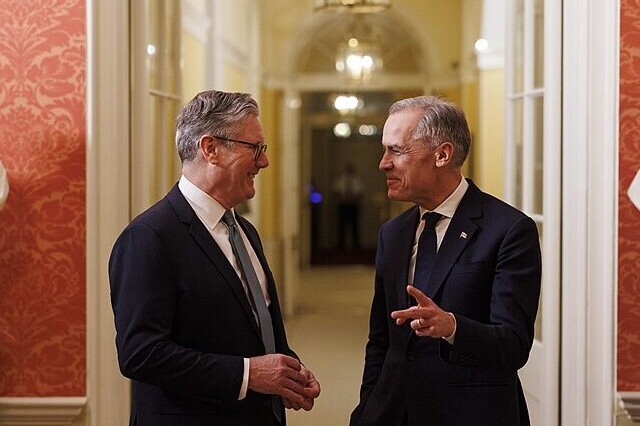
A new middle-power alliance would give Canada leverage and Canadians hope
Canada should lead the world’s middle powers in a collective and overdue weaning from American primacy by establishing a grand new security and economic alliance. As SCP Chair Jon Shell argues in The Hill Times, ten countries including Canada, Australia, France, Germany, Italy, the U.K., Spain, Japan, South Korea and the Netherlands, or the “Core 10," would amount to about the same GDP as the U.S., with significant natural resources, massive buying power - and significant leverage against American economic aggression.