
By Matthew Mendelsohn | Part of our Special Series: Always Canada. Never 51.
The Trump administration is engaged in an economic war of aggression against Canadians. Every day it becomes clearer that the United States is currently a threat to Canada and other democracies around the world. While we wish our American friends well and hope the U.S. changes course, that is not in our hands. Canadians need to prepare.
At Social Capital Partners, we focus on creating pathways for working people to build wealth, own assets and gain economic security. It has been our assumption that extreme wealth inequality and highly concentrated ownership of the economy lead to poor economic performance, civic unrest and democratic decline.

Nothing from the past few weeks leads us to believe differently. When most people don’t have a realistic chance to build economic security, and when they see a system stacked in favour of those who already possess wealth and power, bad stuff happens.
But good stuff is happening too. There is now a wide consensus that we need to be less economically vulnerable to Trump’s economic threats. We are buying more Canadian, investing more in Canada and putting aside relatively minor partisan and regional differences to stand in solidarity with one another.
We are likely at the beginning of a whole-of-society project as Canadians figure out how to mobilize collectively to reorient our policies, practices and investments towards building a stronger, more independent economy in the face of geopolitical threat.
During the free-trade debate of the 1988 Canadian election, Prime Minister Turner famously said that once our economic levers go, our political independence would follow. Canadians have mostly ignored that warning over the past 35 years and our businesses have oriented themselves to buy and sell from the American market, with treaty assurances about how that trade will work. But the current administration has no problem ignoring those agreements.
We are more vulnerable today than we were fifty years ago. We are a branch plant economy, and many of our largest employers do their research and development and hold their IP outside Canada. Many of our businesses have been bought up by American private-equity funds, our main streets are dominated by American chains and many of our largest natural resource companies are no longer owned by Canadians. And we don’t talk about these facts enough because our independent Canadian media has also been bought up by American hedge funds and cannibalized by American digital tech platforms.
Those currently waging an information war against us are hoping to destabilize and divide us, and instill a sense of resignation. But from across the country and across the political spectrum, the opposite is happening. Our commitment to unity has been overwhelming and the realization that we need to build a stronger, more dynamic, less dependent Canadian economy has become obvious. But we need to get busy.
Today, Social Capital Partners is launching a series of policy ideas that will help change systems and grow a more resilient, diversified and independent Canadian economy. Many of our ideas are for governments, but they are also directed towards others who hold wealth and power. We believe that those who control large pools of investment capital have a responsibility to put their resources to work for Canadian communities under threat.
Canada needs to try things we haven’t tried before. We need to do things we know we should have done a long time ago. We need to pursue ideas where the evidence base is strong and where we have straightforward policy and legislative levers. And we also need to try some crazy stuff.
Today, Social Capital Partners is launching a series of policy ideas that will help change systems and grow a more resilient, diversified and independent Canadian economy.
All sectors need to get involved, and government must be there to support and de-risk those efforts. Some things might not work—but failing to act quickly and ambitiously is by far the bigger risk.
Our series focuses on policy ideas that:
- Support Canadian economic sovereignty, advance ownership for Canadians and reduce dependence on the U.S.
- Advance the interests of workers, small businesses, the economically vulnerable and young Canadians who have known for a long time that our economy is not working well for them
- Include sufficient detail to be actionable so we can begin to implement them quickly
Canada is a big, powerful, wealthy country. We are at a moment of historic and geopolitical transition, and we need to seize this opportunity to build an innovative, sovereign economy that builds wealth for working people and supports a strong, inclusive democracy.
So, under economic threat from our powerful neighbour, what do we choose? Always Canada. Never 51.
Share with a friend
Related reading

How Private Equity Extracts Value From the Economy | The Walrus Talks
SCP Fellow Rachel Wasserman explains how private equity firms are extracting value from Canadian businesses.

Getting capital into local businesses and communities must be part of Canada’s investment strategy
Getting capital into local businesses and communities must be part of Canada's investment strategy.
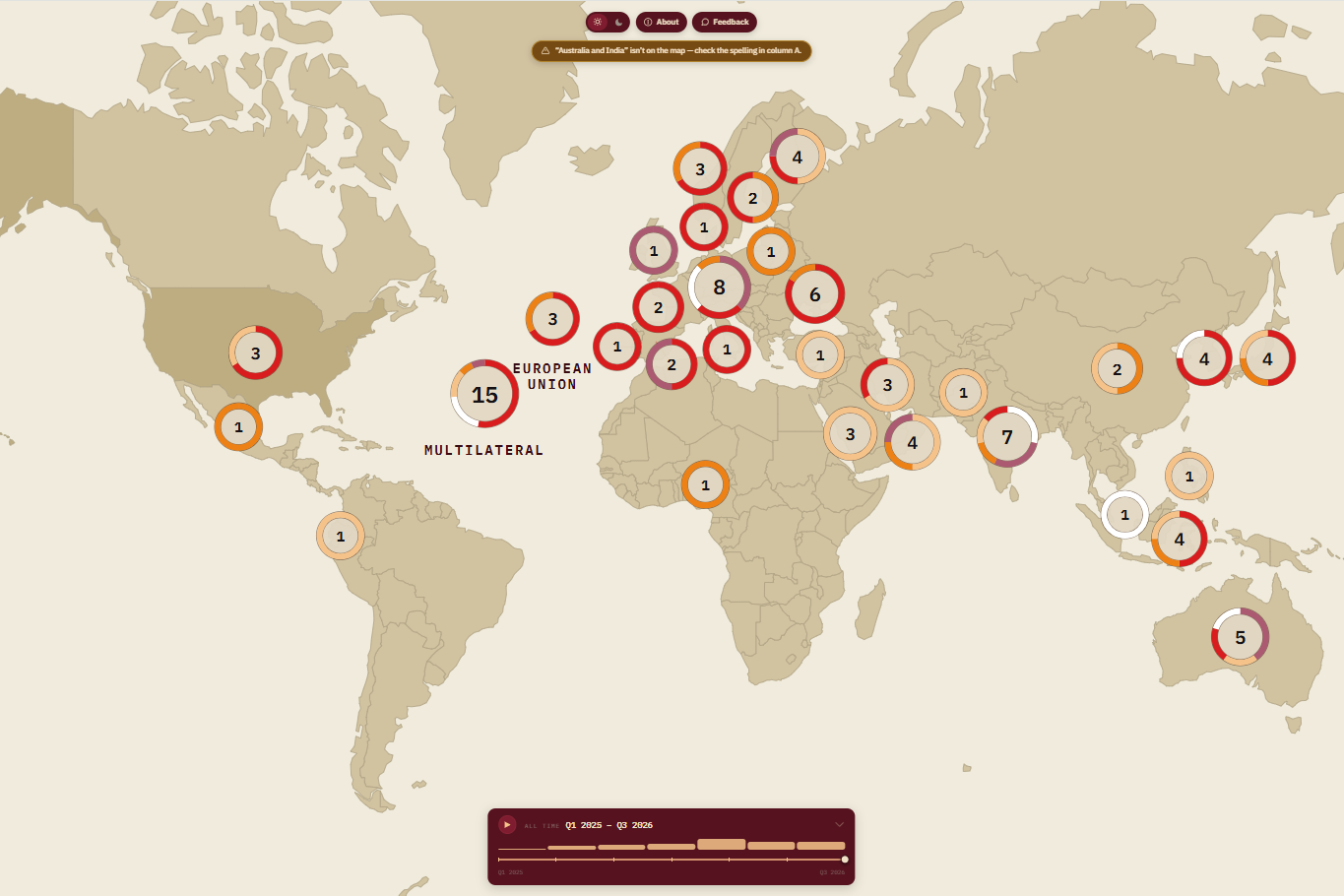
Mapping Canada’s Variable Geometry
In partnership with the Canadian Shield Institute and the Gloves Off podcast SCP built a map of Canada's new international agreements.