
By SCP Fellow Silas Xuereb | Part of our Special Series: Always Canada. Never 51
A recent headline from Statistics Canada found that the income gap – defined as the difference between the disposable income shares of the richest 40% and the poorest 40% of households – reached a record high in early 2025.
However, little attention has been paid to the main driver of this recent spike – the increasing concentration of income derived from wealth.

In 2024, according to the same Statistics Canada data, two thirds of all the income generated from wealth – that is, income in the form of dividends from stock ownership, interest from bonds, capital gains from business and real estate sales, as opposed to from working – was collected by the richest 20% of households, up from only 56.2% in 1999. In just the last two years, the average income from wealth of the top 20% increased by 37%.
This problem is concentrated among the very highest earners. Other data from Statistics Canada shows that, for the top 1%, the proportion of their income that comes from working has declined to 44.3% in 2022 (the most recent year with available data) from 54.1% in 1999. For the top 0.01%, who collected on average $11.6 million in 2022, the proportion of income from working has declined even further, to 28.7% in 2022 down from 54.1% in 1999.
Income from wealth has become increasingly concentrated among a lucky few. This mirrors Canada’s rising wealth inequality – according to the Parliamentary Budget Officer, the top 1%’s share of wealth increased to 24.3% in 2021 from 19.8% in 1999. This means there were 161,700 families with at least $7.3 million in wealth in 2021.
Thomas Piketty’s book, Capital in the Twenty-First Century, rose to fame for highlighting this problem a decade ago – without careful attention to the issue, wealth inequality can continue to accelerate in capitalist economies. Unfortunately, instead of helping to combat the problem, our tax system contributes to it. Because of tax breaks for capital gains and dividends, tax rates on income derived from wealth are lower than those on income derived from working.
Imagine an Ontario-based CEO who earns $13.2 million a year, which was the average pay of the 100 highest paid CEOs in Canada in 2023 and happens to be 210 times the average income of a worker. Most of their pay comes in the form of stock options and shares in their company, which is retained as wealth. During their tenure working as CEO, most of their income would be subject to the top marginal tax rate on employment income of 53.5%. Although clever tax planning could allow CEOs to avoid some of this tax, compensation through shares and stock options above $200,000 (thanks to a legislative change in 2021) are fully taxable. But after retiring at the end of 10 years as an extremely highly paid CEO, assuming they spent one million dollars annually, they could have accumulated over $75 million in wealth held in shares of their own company plus other passive investments.
A modest estimate of the retiree’s returns would be 2% of their wealth in dividends and 4% of their wealth in capital gains. This is over $4.5 million in annual income that would be generated without any work, and would be taxed at only 31% because of the generous tax breaks for dividends and capital gains. Because Canada has no wealth or inheritance tax, this passive income could continue indefinitely, even being passed on to their children.
And the CEO’s taxes would likely be even lower in practice. They could avoid capital gains taxes for years if they do not sell their assets. They can use tax-free savings accounts, which are only fully exploited by high earners, to shield some of their income from wealth from taxes. They could enlist highly –paid lawyers to help them avoid their taxes through the use of tax havens. Because of all these loopholes, the top 1% of income earners, who earn most of their income from wealth, pay only 23.6% of their income in taxes, while middle-earning Canadians pay over 43% of their income in taxes. Reminiscent of the gilded age, this system has created a new class of plutocrats that earn income from wealth extraction instead of wealth generation.
Rather than using the tax system to prevent wealth concentration, as Piketty recommended, our current tax system promotes wealth concentration – those who earn income from wealth have more income left over after taxes, allowing them to accumulate wealth more quickly than others. Even some of the wealthy themselves are now calling to be taxed more, recognizing the unfairness inherent in the current regime and the related systemic risks to social cohesion, democratic stability and economic growth that emerge in situations of deep inequality.
South of the border we are witnessing the consequences of runaway wealth inequality – billionaires use their media conglomerates to get political favours, exploit the instruments of the state to enrich themselves, and, increasingly, secure political office.
All of these trends are leading to the erosion of democracy and public policy that advances the interests of billionaires at the expense of everyone else. If Canada does not rebalance our tax system to prioritize work over wealth, we may soon find ourselves on the same path. A tax system that promotes efficiency and fairness will reinforce our democracy and protect our sovereignty in the face of the challenges represented by Trump.
Share with a friend
Related reading

Getting capital into local businesses and communities must be part of Canada’s investment strategy
Getting capital into local businesses and communities must be part of Canada's investment strategy.
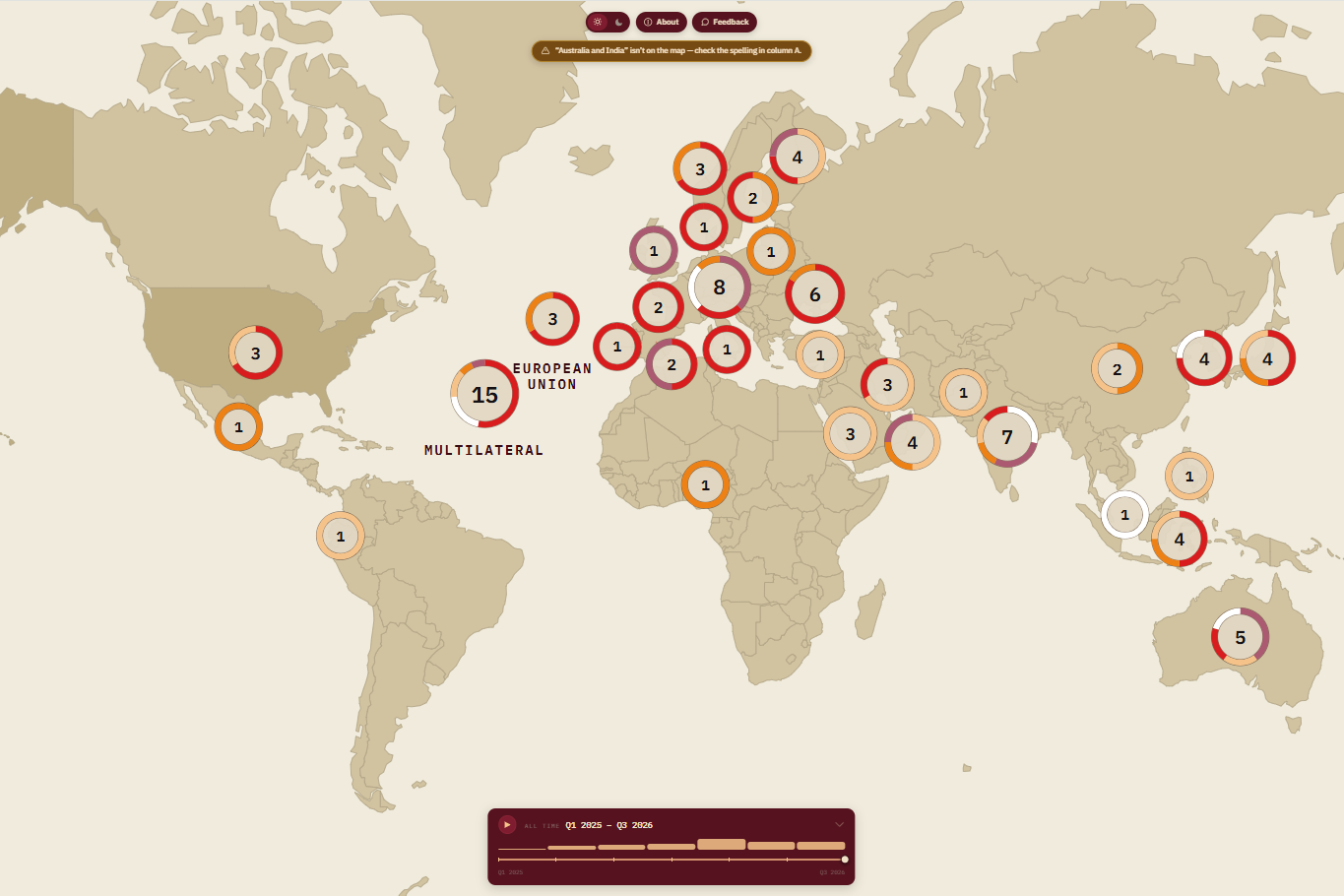
Mapping Canada’s Variable Geometry
In partnership with the Canadian Shield Institute and the Gloves Off podcast SCP built a map of Canada's new international agreements.
Social Capital Partners’ 2026 Federal Pre-Budget Submission
Canada must mobilize all the tools at our disposal right now to build a strong, sovereign, resilient economy.