Browse our ideas, opinions and initiatives designed to unlock pathways to wealth and economic security for working people. Or, filter your search by Topic or Type by clicking the menu options on the left.
A man sits at a desk speaking, with the subtitle Inequalities persist at a very extreme level. Above him is an illustrated cover of the World Inequality Report 2026. Employee ownership trusts FAQs are highlighted in a modern, bright office setting.

What the new World Inequality Report tells us, and why it matters for Canada

The 2026 World Inequality Report is out and the results paint a picture of a world in which a tiny minority commands unprecedented financial power, while billions remain excluded from even basic economic stability. As SCP Director of Policy Dan Skilleter writes, Canada is far from immune to these global trends: although our own GDP keeps rising, wealth gains have been concentrated at the very top, while many households struggle to afford food and housing. The top 1% in Canada hold about 29.3% of total wealth, making our country's wealth inequality even more pronounced than our own Canadian Parliamentary Budget Officer reports. The good news is, momentum is building in Canada for better wealth data, shedding light on our "Billionaire Blindspot."

Two women, one older and one younger, sit close together on a couch, smiling as they look at a book or magazine in their laps—perhaps exploring employee ownership trusts FAQs in the softly lit room by the window.

How intergenerational inequality threatens trust in democracy | Policy Options

Our political leaders must be willing to make difficult tradeoffs to rebalance policies toward the young and away from older Canadians, write Jean-François Daoust, Liam O'Toole and Jacob Robbins-Kanter in Policy Options. The broader economic picture for younger Canadians offers little hope, and economic frustration is shown to run hand-in-hand with political alienation. As intergenerational inequality persists and deepens, Canada risks experiencing an even sharper decline in trust in its democratic institutions than what already exists. Building affordable housing and supporting young families are essential first steps in a much-needed generational reset that puts fairness at the centre of Canadian political life.

Hand holding a Bitcoin in front of a computer showing digital graphs

Hype or help? Can crypto and stablecoins solve economic inequality?

Some cryptocurrency advocates are promoting the use of stablecoins as a common currency, arguing that this new currency could help the cost-of-living crisis and promote economic equality – particularly for young people. Law professor, money expert and SCP Fellow Dan Rohde is not convinced that crypto can help address economic inequality. In this explainer, he breaks down what stablecoins are and aren’t, and how to think critically about their promises.

Small child and parent peek over a grey fence

Wealth inequality in Canada is far worse than StatsCan reports

Our government’s best available data on Canada’s wealth gap excludes, by design, the wealthiest families in the country. As SCP Director of Policy Dan Skilleter writes, if we didn’t have the Parliamentary Budget Officer fact-checking Statistics Canada’s work, their numbers would tell us the top one per cent own only 2.5 per cent of all wealth – not nearly 25 per cent of all wealth in Canada, as the PBO reports. We like to think of Canada as a beacon of egalitarianism compared to our southern neighbours, but when you add in data from "rich lists" published by Forbes and Maclean's, our wealth concentration looks quite similar to the U.S.

woman types on calculator with papers and laptop open in front of her

How Canada’s tax system puts the wealthy above workers

Rather than using the tax system to prevent wealth concentration, our current tax system promotes it. Those who earn income from their investments have more income left over after taxes, allowing them to accumulate wealth more quickly than others. SCP Fellow Silas Xuereb explains how, south of the border, we are witnessing the consequences of runaway wealth inequality – billionaires use their media conglomerates to get political favours, exploit the instruments of the state to enrich themselves and, increasingly, secure political office. All of these trends are leading to the erosion of democracy and public policy that advances the interests of the wealthy at the expense of everyone else. If Canada does not rebalance our tax system to prioritize work over wealth, we may soon find ourselves on the same path.

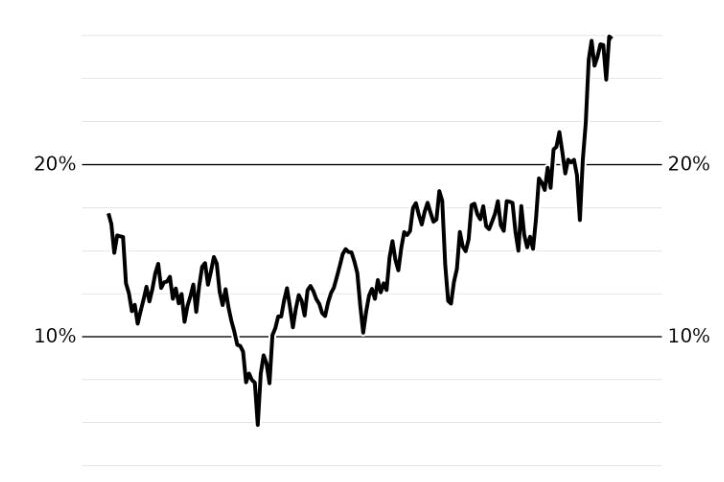
Line graph showing Canadian corporate profits as a percentage of GDP from 1980 to 2023. Profits fluctuate between 10% and 20% until 2020, then rise sharply to nearly 30% by 2023, highlighting trends in wealth inequality.

Innovate? In this economy? With these profit margins?

Canadian businesses are immensely profitable, but businesses simply haven't been reinvesting in them. As Tom Goldsmith writes in Orbit Policy's Deep Dives, the financialization of Canada’s economy and the high levels of rent extraction that accompany it are barriers to innovation. We are impoverishing ourselves over the long term to support short-term financial gains. If we care about innovation and productivity, then we need to focus far more critical attention on corporate Canada.

Woman votes at elections canada polling station with two staff looking on and smiling

Canada’s Liberal party will face down Trump. But will it address inequality? | Truthout

Prime Minister Mark Carney has a monumental task to lead Canadians through the turmoil of a second Donald Trump term, while also addressing various crises: affordability, housing, toxic drugs and health care, to name a few. For Truthout, Nora Loreto interviewed SCP Fellow Silas Xuereb about the crises that loomed over Canada's recent federal election and one fundamental cause that was never clearly identified: concentrated corporate power.

Woman sits on the couch looking at a laptop with her hand on her young son's chest beside her

As Canada prepares for disruption and sacrifice, whose side are our leaders on?

In this election, Canadians are looking for a leader who will stand up to economic threats from our mercurial and adversarial neighbour. But how, Matthew Mendelsohn asks, will the ideas on offer help workers, regular people, not-for-profits and smaller and medium-sized businesses transition to the emerging new world order? Yes, Canada needs economic growth, but it needs to be the kind that enriches working Canadians, not just not just large financial and corporate interests.

Two women stand at a white cart with a red and white striped canopy, where a man is serving canned drinks and popcorn boxes outdoors on a sunny day. The cart, featuring the letters PC, hosts an event about Social Capital Partners.

A message from Social Capital Partners: We’re going to tell you the truth

There are lots of real, tangible public-policy solutions to the problems we face, says Matthew Mendelsohn. It begins with talking about the economy in a different way, grounded firmly in the public interest and data that reflect the reality of how people experience their economic lives.

Logo for Social Capital Partners features rows of white dots forming a square, with “Social Capital Partners” text on a vibrant gradient background of teal, blue, and magenta.

Preparing for SCP’s next strategic phase

Social Capital Partners has a long history of investing in people and projects that create more economic opportunity in Canada. Recently, our focus has been on establishing more avenues for working Canadians to build wealth through ownership. Learn more about what we are moving towards.

Close-up view of a modern glass office building with angular, geometric lines and numerous windows reflecting light—a scene echoing the bank of canada productivity ethos, where structure and repetition create an abstract, mirrored effect.

Bank of Canada’s unproductive productivity speech

Social Capital Partners' CEO, Matthew Mendelsohn, reflects on the Bank of Canada's productivity speech and calls for need of fresh ideas, voices and questions.

Fast Facts

Our fast facts

SCP highlights

View the highlights
Skip to content