We are always looking for ideas that will unlock pathways to wealth and economic security for working people.
We monitor what other countries are doing to see what is having the most impact. We look at what provincial, territorial and municipal governments are doing that can be scaled.
We focus on the issues where we can have the most impact, and where our leadership or support will be the most valuable.
If there is something we should explore further, please let us know.

On this topic

A Conservative case for Community Benefits Agreements?
When a developer builds a new bridge or transit line, a Community Benefits Agreement ensures the project will also benefit the people living nearby. In Canada, CBAs have long been seen as a progressive policy tool. But what if Conservatives embraced them too, just with different priorities? In this piece, SCP's Director of Policy Dan Skilleter explores how Conservative governments might champion their own vision for CBAs and what that means for advocates on the left. The lesson: if you want good social outcomes from big projects, stop letting perfect be the enemy of the good.

Watch the video: Why do Canadians work so hard and get so little?
Low productivity means lower wages and a lower standard of living. Canada does need to boost productivity—but we keep trying the wrong things. Watch SCP CEO Matthew Mendelsohn explain the productivity conversation Canada actually needs to have.
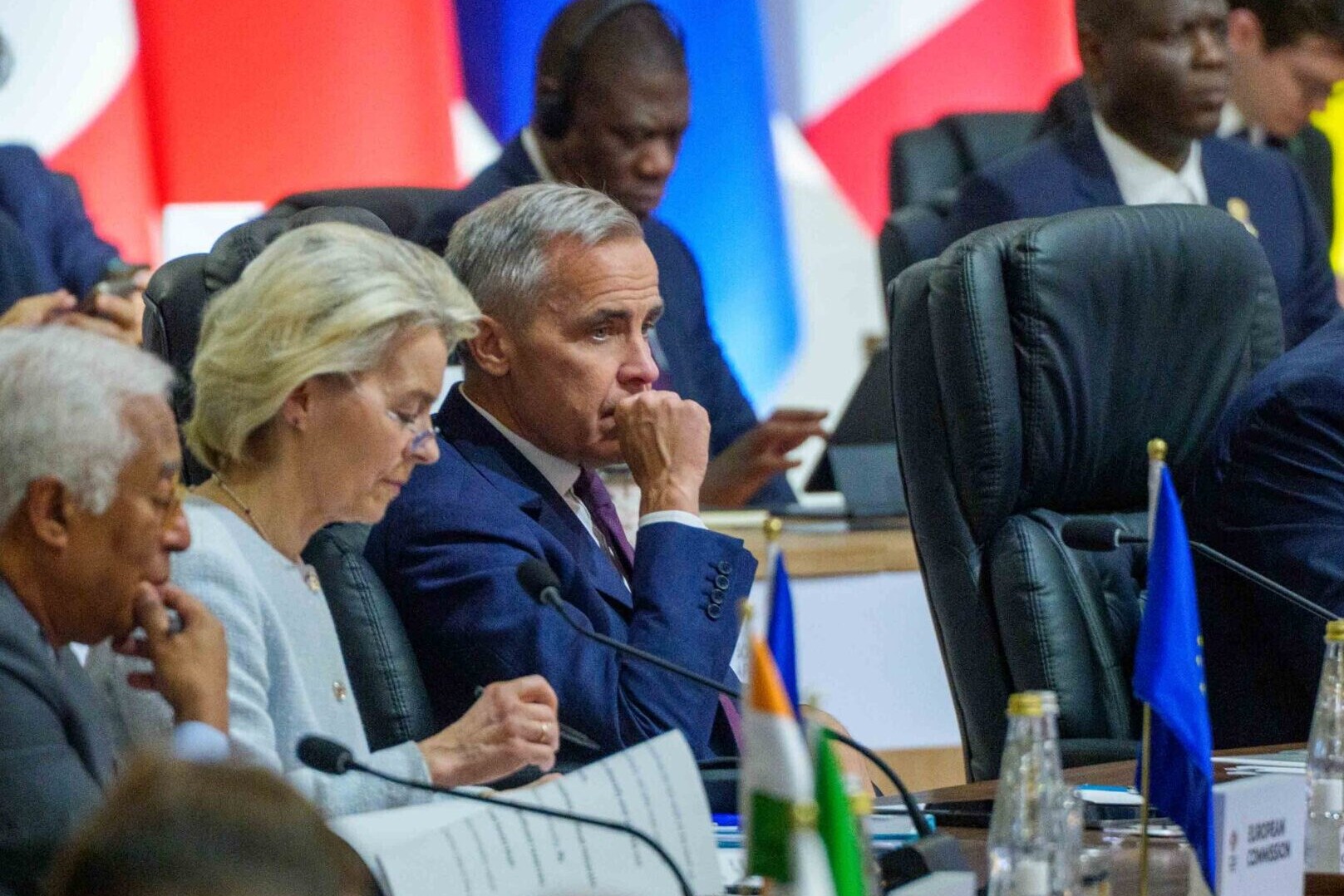
Mark Carney’s Davos speech is a manifesto for the world’s middle powers
Mark Carney's recent speech at Davos matters because it treats this moment as a rupture, not a passing disruption. It’s in this rethink, write Matthew Mendelsohn and Jon Shell, that there is also relief: “From the fracture, we can build something better, stronger and more just,” Carney said. “This is the task of the middle powers.” The world's middle powers are not powerless, but we have been acting as if we are, living within the lie of mutual benefit with our outsized and increasingly erratic neighbour. Without the U.S., the world's middle-power democracies are rich, powerful and principled enough that we can unite to advance human well-being, prosperity and progress.

As the federal government sets out to “build, baby, build,” do we want to own or be owned?
As our new government pursues growth and a nation-building agenda, we should remember this lesson from history: too often, we build and invest, only to sell off our assets and resources to the highest foreign bidder, leaving us economically vulnerable. In this moment of extreme peril, SCP CEO Matthew Mendelsohn asks how we should “build, baby, build” in a way that doesn’t merely accelerate the trends towards consolidation of wealth and deeper economic dependence. Canada has everything we need to emerge stronger from this period of geopolitical disruption if we put economic sovereignty and broad access to wealth-building at the heart of our agenda.
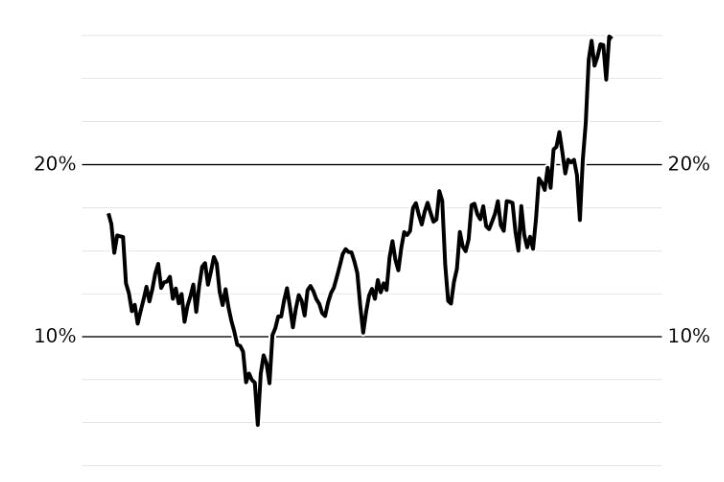
Innovate? In this economy? With these profit margins?
Canadian businesses are immensely profitable, but businesses simply haven't been reinvesting in them. As Tom Goldsmith writes in Orbit Policy's Deep Dives, the financialization of Canada’s economy and the high levels of rent extraction that accompany it are barriers to innovation. We are impoverishing ourselves over the long term to support short-term financial gains. If we care about innovation and productivity, then we need to focus far more critical attention on corporate Canada.

The misleading use of per capita GDP: Numerators, denominators and living standards | Policy Options
Certain partisans have been citing Canada's performance on per capita GDP as evidence of a supposed 'lost decade' and economic mismanagement. In Policy Options, economist and director of the Centre for Future Work Jim Stanford deconstructs this arbitrary and misleading statistic. In the first of a two-part analysis, he explains multiple factors affecting both the numerator and denominator in this headline-grabbing number and how recent trends in GDP per capita say more about rapid immigration than about Canada’s overall economic health.
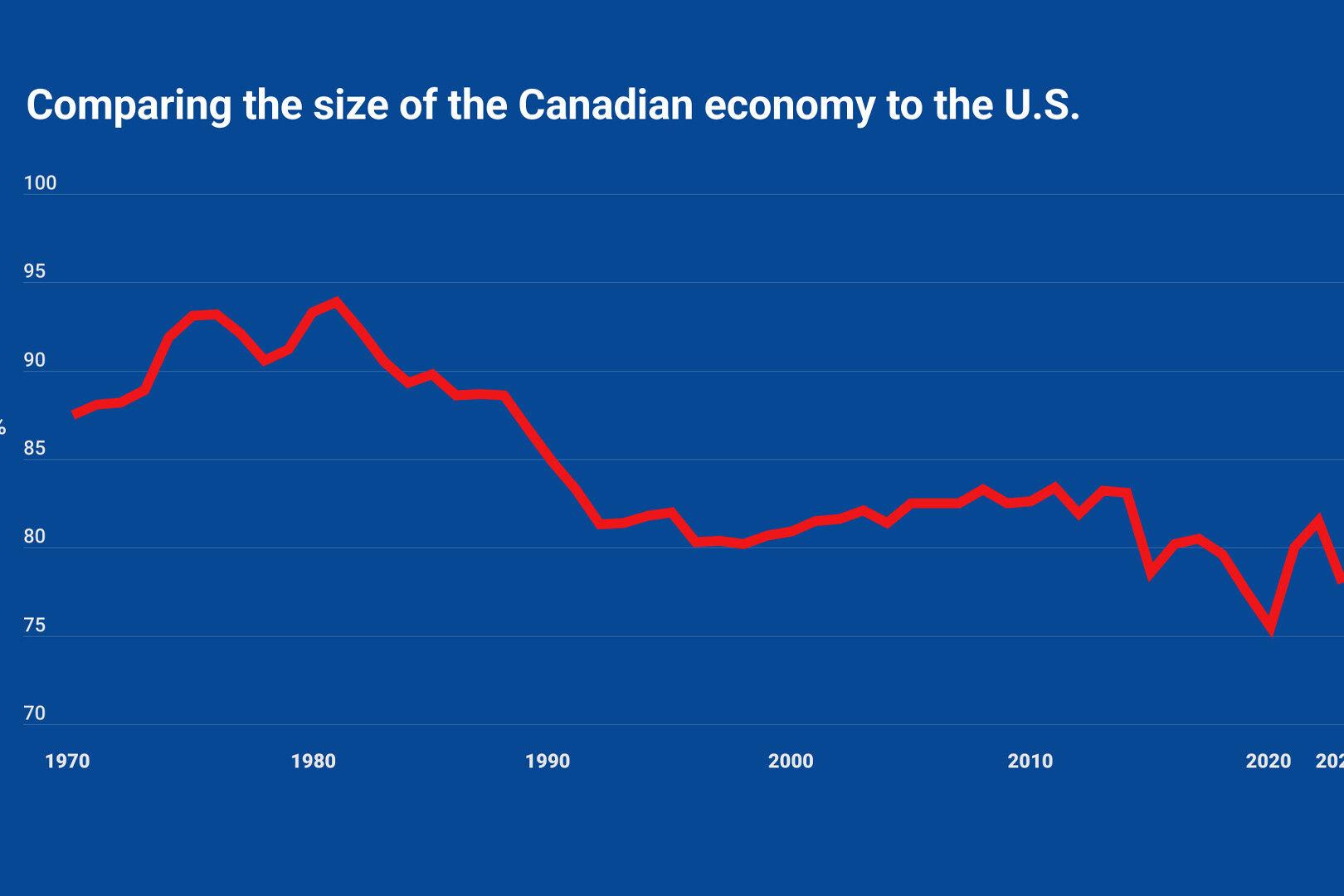
The perils of per capita GDP: No, Canada is not poorer than Alabama | Policy Options
Some business and political commentators cite a growing gap between the per capita GDP of Canada and the U.S. as evidence of Canada’s purported economic dysfunction. In Policy Options, economist and director of the Centre for Future Work Jim Stanford deconstructs this arbitrary and misleading statistic. In the second of a two-part analysis, he explains how Canada is not poorer than Alabama and how, despite lower economic growth per person, most Canadians earn more, live longer and fare better than Americans.

As Canada prepares for disruption and sacrifice, whose side are our leaders on?
In this election, Canadians are looking for a leader who will stand up to economic threats from our mercurial and adversarial neighbour. But how, Matthew Mendelsohn asks, will the ideas on offer help workers, regular people, not-for-profits and smaller and medium-sized businesses transition to the emerging new world order? Yes, Canada needs economic growth, but it needs to be the kind that enriches working Canadians, not just not just large financial and corporate interests.

Canada needs a new civil defence corps | The Tyee
If Canada were to build a civil defence program on the scale of those in Sweden or Finland, the numbers would be game-changing. As MASS LBP principal Peter MacLeod lays out in The Tyee, Canadians must be prepared to defend our sovereignty and citizens have roles to play.

A message from Social Capital Partners: We’re going to tell you the truth
There are lots of real, tangible public-policy solutions to the problems we face, says Matthew Mendelsohn. It begins with talking about the economy in a different way, grounded firmly in the public interest and data that reflect the reality of how people experience their economic lives.

Preparing for SCP’s next strategic phase
Social Capital Partners has a long history of investing in people and projects that create more economic opportunity in Canada. Recently, our focus has been on establishing more avenues for working Canadians to build wealth through ownership. Learn more about what we are moving towards.

Bank of Canada’s unproductive productivity speech
Social Capital Partners' CEO, Matthew Mendelsohn, reflects on the Bank of Canada's productivity speech and calls for need of fresh ideas, voices and questions.