
By Keldon Bester, the Canadian Anti-Monopoly Project (CAMP). This post first appeared in Policy Options.
The prospect of a potential pile-up of U.S. tariffs on Canadian exports has spurred discussion around potentially appeasing the White House by opening our markets to American companies.
Many see this as a potential win-win: avoiding tariffs while creating competition in traditionally protected sectors. But these proposals often gloss over the reality that Canada needs to look within when it comes to solving the competition problems in our marketplaces.
Flying the friendly (but overpriced) skies
Canadians face a number of competition pain points across the economy, beginning with air travel. There is ample evidence of high prices, reduced service and numerous personal accounts from Canadian air travellers of shabby treatment.
In 2024, Canada’s two major carriers – Air Canada and WestJet – were found near the bottom of consumer satisfaction and on-time performance rankings. Understandably, it becomes tempting to gaze longingly to the south at the U.S. and its air travel market featuring four major carriers and a host of regional lines and wonder why they can’t fly here, too.
It is reasonable to presume a protectionist barrier is to blame, whether it be cabotage restrictions or a cap on foreign ownership of domestic airlines. The real reason, however, lies in Canada’s sprawling geography and the economics of air travel more broadly.
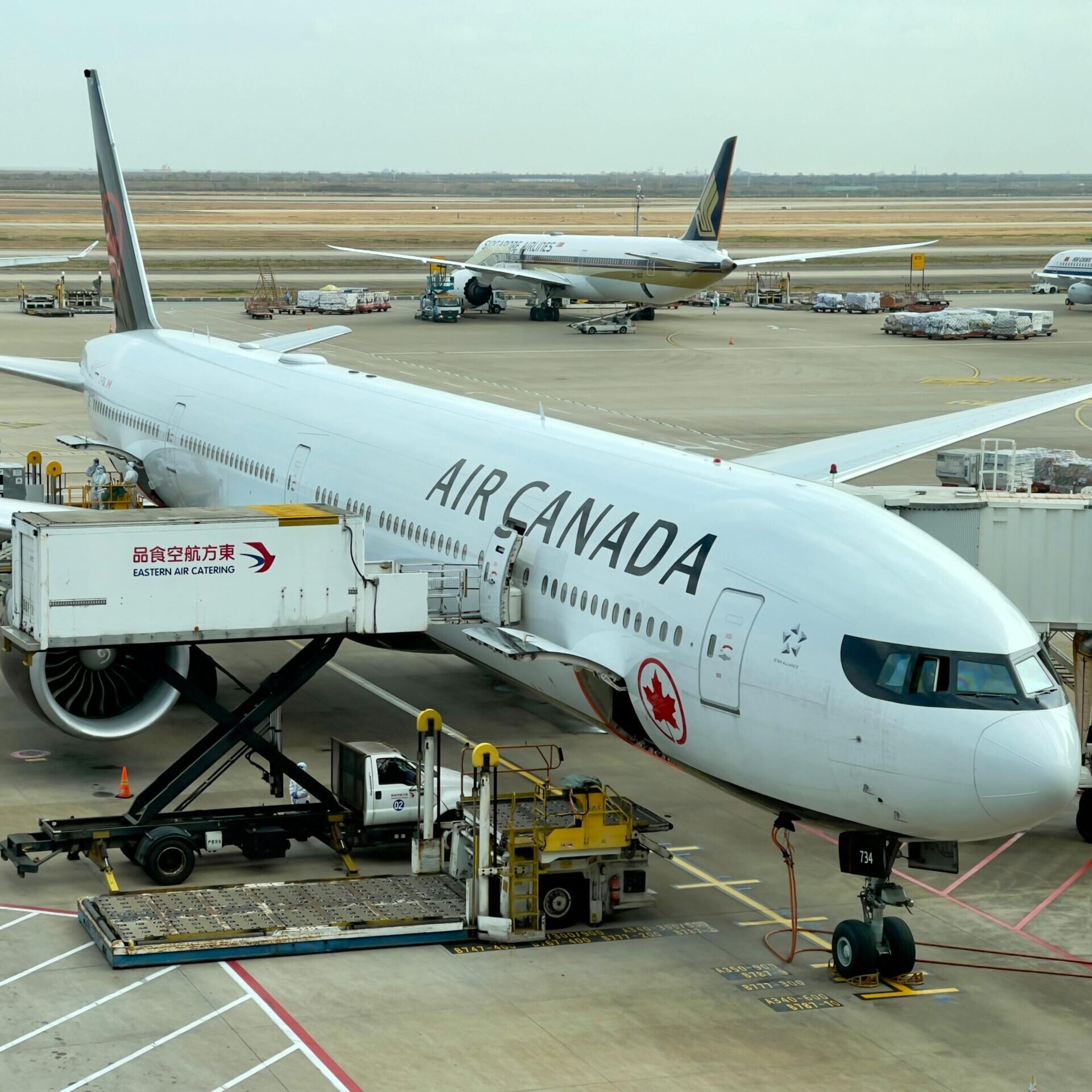
U.S. carrier competition is not going to save Canadians for the same reason U.S. carriers are not saving Americans. After decades of consolidation, U.S. carriers are pulling out of routes to small and mid-size American cities with much higher potential passenger volumes than their Canadian equivalents. Today, U.S. airlines already service the Canadian routes they want through their own hubs. The idea that U.S. carriers already pulling out of much larger domestic routes would jump to provide service on lower-traffic international routes is mistaken.
You can take that to the bank
A similar situation is at play in Canada’s notoriously stable and profitable oligopoly banking sector.
Taking President Donald Trump’s recent call with Prime Minister Justin Trudeau at face value, one might be led to believe that Canadian banks are protected by restrictions limiting foreign involvement.
In fact, (relatively) recent history demonstrates otherwise. The sale of HSBC Canada to RBC in 2024 and ING Direct to Scotiabank in 2012 are just two examples of foreign banks that operated in Canada before pulling up stakes.
The Canadian banking sector is heavily regulated with an exceedingly high barrier to entry, including an important limit on what percentage of a bank can be held by a single entity, but these restrictions apply equally whether a company is foreign or domestic. Attempts by HSBC and ING Direct to grow in Canada show our banking sector needs no border wall to thwart international competition.
Internet impediment
A perennial pain point for Canadians where restrictions on foreign ownership actually do exist is the sky-high cost we pay for internet connectivity. International telecoms are barred from acquiring players with over 10 per cent market share, and no provisions exist to allow foreign service providers to use incumbent infrastructure to compete for customers.
Absent these barriers, it is possible to imagine a player such as T-Mobile, which recently brought Starlink satellite internet to market in the U.S., competing in Canada and disrupting the status quo and driving down prices through competition.
Yet, there is nothing uniquely avaricious about our homegrown telecom companies. Telecom executives in other countries would like to get away with charging high prices for their services if they could.
But more intense competition in their own markets instead keeps them delivering for customers. Despite recent claims to the contrary by companies like Telus, Canadians should not expect much change without altering the underlying competitive structure of the Canadian telecom market.
In addition to its limited potential for competitive disruption, foreign ownership of telecommunications also raises the now pressing issue of preserving Canada’s sovereignty. American tech firms already dominate how Canadians connect with one another and access information online. Allowing them to integrate deeper into our communications infrastructure risks further undermining the ability of Canadians to communicate freely with one another amid heightened global uncertainty.
Fenced-off food supply
Along with the banking sector, access to Canada’s supply-managed agricultural markets has been mentioned as trade issues by Trump, his Commerce Secretary and the U.S. Trade Representative. From the perspective of consumers, there is no doubt that opening these markets to competition has the potential to lower prices and increase variety for consumers.
But recent price hikes in U.S. supermarkets and the behaviour of Trump 2.0 are reminders of the value of independent and sovereign food systems.
The American food system has undergone even more intense consolidation than its Canadian counterparts. The consequences of that consolidation are beginning to show up on grocery shelves.
Following the explosion of avian flu that has ravaged America’s massive factory chicken farms, the average cost of a dozen eggs has risen above US$4, with shoppers in states like California seeing prices as high as US$10. While maintaining domestic supply has typically resulted in higher prices, Canada’s supply chain has seen less consolidation, and Canadians do not need to worry about continuous access to these commodities, no matter the mood of the U.S. president.
Embracing competitive creativity
In each case, from airlines to egg crates, Canadians need to do the hard work of internal reform to support vibrant markets. With our closest trading neighbour now re-evaluating its relationship with its allies, this task has become more pressing than ever before.
This begins by ensuring that public regulation of markets allows new competitors to grow and thrive and that the private regulation by oligopolies does not hamper this process.
As a starting point, Canada’s newly reformed competition law must be assertively enforced. Beyond that, we need to begin thinking more deeply about how markets work and embracing creativity in how Canadians can get the best out of them.
In airlines it could mean removing fees and orienting regulation to better support smaller carriers suited for rural and remote service. The banking sector could see the opening of financial infrastructure and secure consumer data to domestic upstarts seeking to challenge the big banks.
In telecom, we can invest in new technologies to connect remote communities while ensuring the sovereignty of our communications systems. In our food system, reimagining support for a broader domestic supply agenda has the potential to offer greater affordability and choice for consumers while building resiliency.
Trump’s tariff threat has opened the door for economic thinking that pushes us, whether we like it or not, beyond the norms of business as usual in Canada over the past 40 years. But Canadians cannot expect ‘one weird trick’ – a phrase popularized by clickbait ads promising effortless solutions – to fix our economy.
Policymakers need to move quickly and enact reforms unlocking domestic competition rather than relying on foreign competitors to save the day. To build a more resilient and independent country, the hard work starts at home.
Share with a friend
Related reading
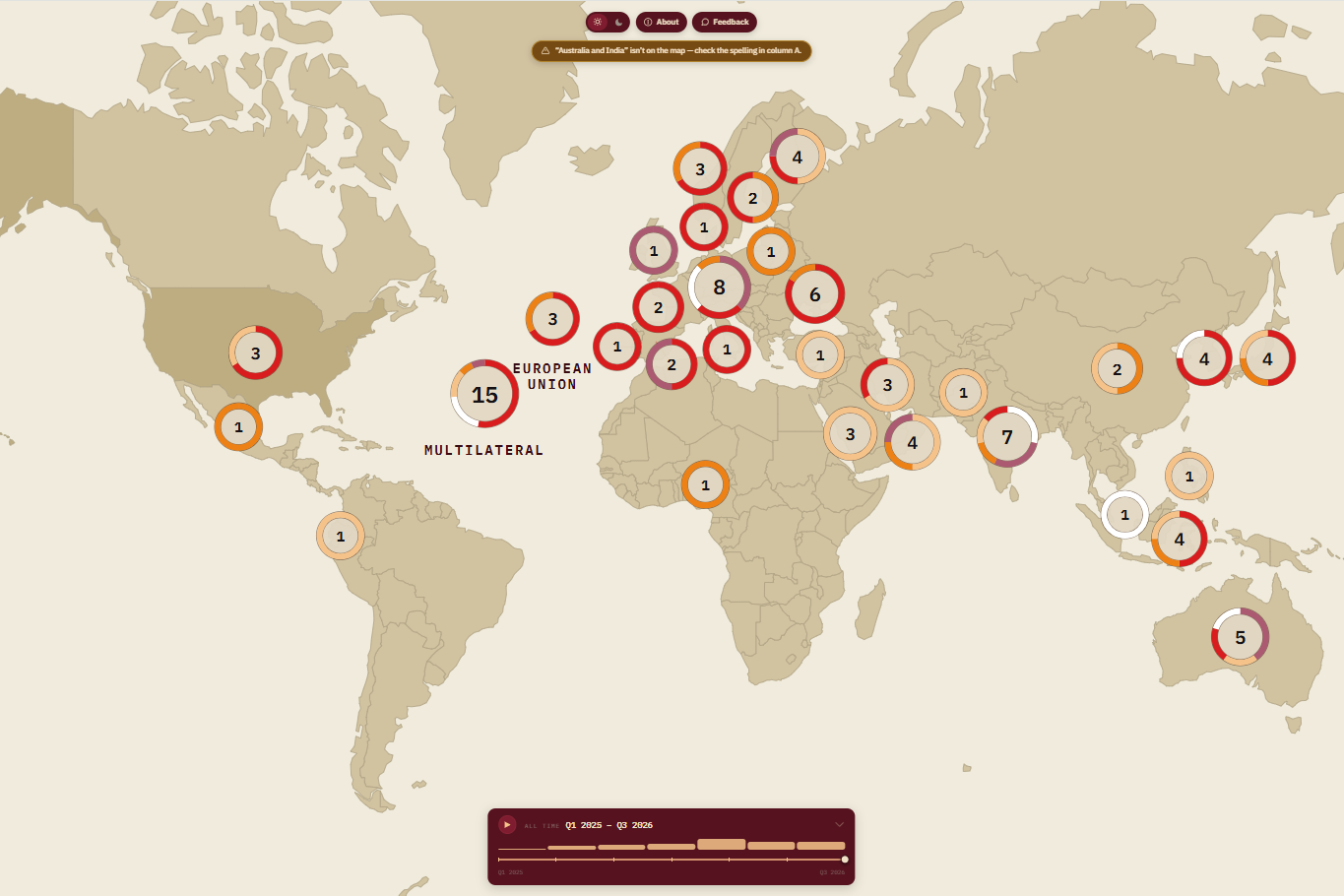
Mapping Canada’s Variable Geometry
In partnership with the Canadian Shield Institute and the Gloves Off podcast SCP built a map of Canada's new international agreements.

Social Capital Partners’ 2026 Federal Pre-Budget Submission
Canada must mobilize all the tools at our disposal right now to build a strong, sovereign, resilient economy.

Built to Reach: How institutional accountability shapes the reach of financial systems
Canada needs a greater diversity of accountability in financing institutions to reach all our viable enterprises.