

By Jon Shell | Part of our Special Series: The Ownership Solution | This post first appeared in Canadian Business
Canada is entering one of the largest waves of business succession in its history, with thousands of founders preparing to retire. A 2023 report from the Canadian Federation of Independent Business (CFIB) report found that about three-quarters of Canadian small and medium-sized business owners, controlling more than $2 trillion in business assets, plan to leave their companies within the next decade. The question isn’t whether these companies will be sold, but who will own them and where the benefits will flow.
For decades, many retiring business owners sold their companies to private equity or foreign buyers. Today, however, the shifting political and economic climate in the United States is prompting some Canadian owners to rethink the implications of such sales. In a period of volatility and rising economic nationalism at home, ownership is critical in shaping company decisions, directing capital and determining whose interests drive a business’s future.
As chair of Social Capital Partners (SCP), a non-profit organization focused on broadening access to wealth and ownership, I have advocated for solutions that keep ownership in Canadian hands while benefiting employees. One of the most practical tools to achieve this is Employee Ownership Trusts (EOTs), which lets business owners sell a majority stake to a trust holding shares on behalf of employees, without requiring them to invest their own money. The trust typically finances the purchase through a mix of bank and owner loans, repaid over time from the company’s future profits. As the business grows, employees share in the financial success, gaining ownership without taking on personal risk.

EOTs were established in the United Kingdom in 2014, providing business owners a practical way to transfer ownership to employees while protecting jobs, company culture and local roots. The model was designed to support business succession and keep companies within their communities. In Canada, federal legislation for EOTs arrived in June 2024, offering a similar solution to succession challenges and a path to strengthen communities through local employment.
Early signs show they are already having a positive impact. Grantbook, a Toronto-based strategic technology consultancy, became the first Canadian company to transition to an EOT last year. Another example is Taproot, a social services organization with 750 employees serving individuals, families and youth across British Columbia, Alberta, and Ontario. Its leadership chose to transfer ownership to employees rather than sell to an outside buyer, preserving the organization’s mission, keeping it under Canadian control, and giving frontline workers a stake in its long-term success. One employee described it as the first time she had truly owned anything in Canada–an immigrant who built her career here, she suddenly held a stake in the company she helped grow. This isn’t purely symbolic–it’s real wealth creation.
Research shows that EOTs are also a sound business strategy. Research by Harvard Business School shows employee-owned firms often see higher productivity, stronger retention and greater resilience during downturns. When employees have a vested interest in the company’s success, they are more engaged and productive. These firms also default less on loans and lay off fewer workers during recessions. EOTs can work for many industries, but they are best suited to mature, cash-flowing sectors, such as professional services, manufacturing, wholesale and construction, where stable profits make it easier for the trust to finance the purchase and repay the seller over time.
In June 2024, the federal government took a step forward by introducing a temporary $10 million capital gains exemption for qualifying sales to EOTs, available through 2026. But for the policy to drive growth, the market needs certainty. Its imminent expiry, after being in effect for less than three years, is preventing the expansion seen elsewhere. The government must act quickly to make the incentive permanent, providing a clear path for employee ownership to contribute to a stronger, more productive economy.
Experience abroad shows that stable, predictable incentives are key to growing employee ownership over the long term.
In the United Kingdom, significant tax incentives have helped employee ownership grow steadily since 2014, with around 2,470 companies now using EOTs. In the U.S., long-standing government support for employee ownership has led to more than 6,400 companies with Employee Stock Ownership Plans (ESOPs), where employees gradually acquire shares, often funded by profits or loans. These examples show how sustained policy can grow employee ownership.
EOTs may not be suitable for every company. Transitions typically take a year or more and require careful financial planning, including financing the trust. Policy uncertainty compounds the challenge–many owners hesitate to begin a transition with the capital gains exemption set to expire at year’s end. Alongside some of Canada’s top business leaders and CEOs, we’re actively advocating for Ottawa to create a solid runway for EOTs to take off in Canada by making this vital tax incentive permanent.
As uncertainty in the U.S. continues to shape capital markets and political debate, Canadian business owners are increasingly aware of the consequences of foreign ownership. When companies are sold abroad, key decisions about investment, hiring and growth are often made elsewhere, weakening local control and community ties. Employee ownership provides a distinctly Canadian alternative.
The coming wave of succession will shape Canada’s economy for generations. Employee ownership safeguards economic sovereignty, while boosting growth and productivity and giving employees struggling with affordability a new source of income. As owners seek alternatives to selling abroad, the EOT provides a practical answer. Instead of letting support lapse, now is the time for the government to double down on employee ownership.
Share with a friend
Related reading

A housing boom isn’t a win for wealth equality and here’s why
Canada's wealth gap appeared to narrow between 2019 and 2023 and we set out to make sense of this. SCP's Director of Policy Dan Skilleter, the lead author on our 2024 Billionaire Blindspot report, connected with sector colleagues working on wealth concentration and dug into all the best available data. What he found was that the dip was largely a mirage, driven by a pandemic housing boom that temporarily inflated the one asset ordinary Canadians hold: their home. Meanwhile, these soaring prices locked out an entire generation from building wealth altogether.

A Conservative case for Community Benefits Agreements?
When a developer builds a new bridge or transit line, a Community Benefits Agreement ensures the project will also benefit the people living nearby. In Canada, CBAs have long been seen as a progressive policy tool. But what if Conservatives embraced them too, just with different priorities? In this piece, SCP's Director of Policy Dan Skilleter explores how Conservative governments might champion their own vision for CBAs and what that means for advocates on the left. The lesson: if you want good social outcomes from big projects, stop letting perfect be the enemy of the good.
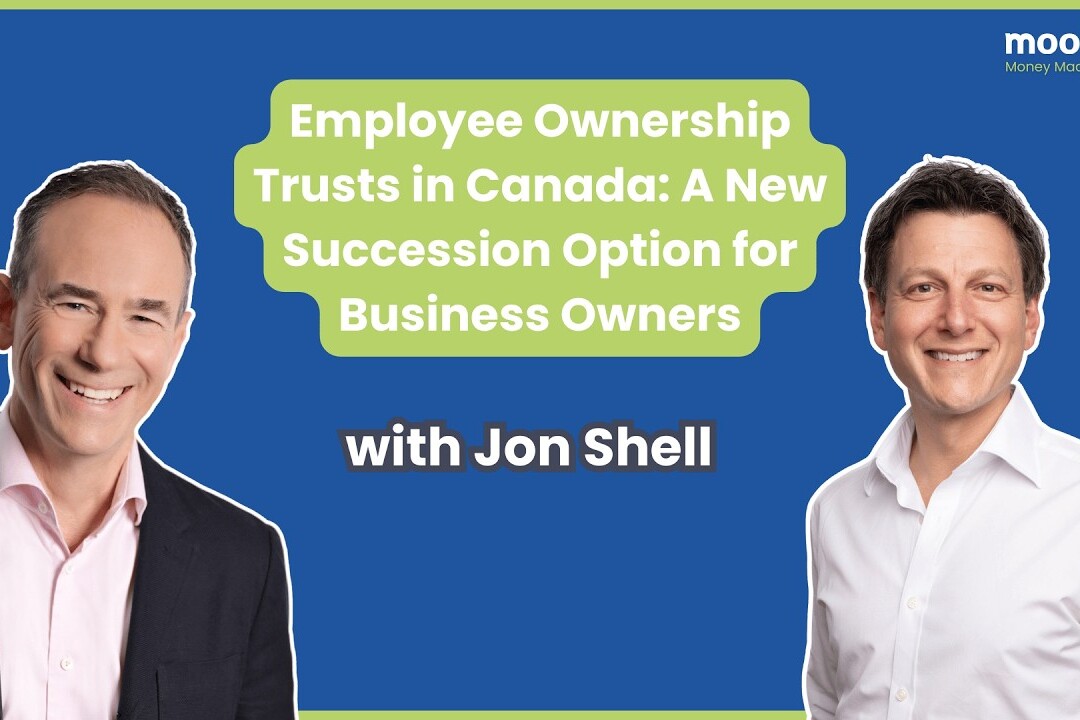
Watch the video: EOTs in Canada – a new succession option for business owners with Jon Shell
In this episode of the Moolala: Money Made Simple podcast, Jon Shell joins Bruce Sellery to explain how employee ownership trusts (EOTs) work and why they could reshape business ownership in Canada. They discuss what employee ownership means and how it works, the purpose of the new Employee Ownership Research Initiative, current research gaps around employee-owned businesses and how employee ownership has evolved in Canada in recent years. The conversation explores how employee ownership could support business succession, strengthen workplaces and create new pathways for shared prosperity.